
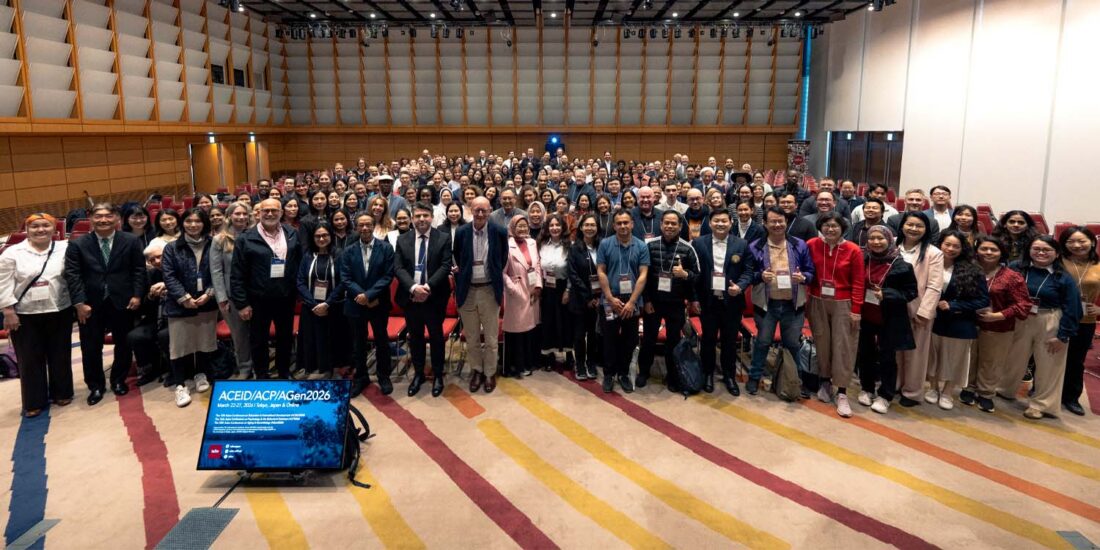
The 12th Asian Conference on Education & International Development (ACEID2026), held alongside The 16th Asian Conference on Psychology & the Behavioral Sciences (ACP2026), and The 12th Asian Conference on Aging & Gerontology (AGen2026) in Tokyo, Japan, from March 22-27, 2026, attracted around 890 delegates from 69 countries and 580 institutions. The discussions at the conference addressed the current transformation of the world order and its implications for globalisation, international education, democracy, ageing, and community.
Globalisation and internationalisation are not disappearing, not least because the mounting challenges humanity is facing are bringing us closer together than ever before. Rather, this transformation points to a new phase in which internationalisation becomes more selective, regionally diverse, and closely tied to national interests. Exchanging information to contrast the local with the global, foster critical thinking, broaden limited medical definitions, create a happier population, and help us age gracefully and with purpose is essential in these turbulent times that put pressure on academic universalism: the idea that knowledge belongs to everyone.
Conference Report and Intelligence Briefing 2026 – Issue 3 – ACEID/ACP/AGen2026
Editor: Joseph Haldane & Melina Neophytou
Authors: Ken Camiling, Briar Pelletier & Apipol Sae-Tung
Published: June 12, 2026
ISSN: 2759-4939
In partnership with: The IAFOR Research Centre at the Osaka School of International Public Policy (OSIPP)
Subscribe and Stay Informed
Receive key insights directly to your inbox.
Stay informed of the latest developments in academia.
100% free to read, download and share.
Contents

Introduction
Written by Dr Melina Neophytou, IAFOR, Japan
The post-Cold War world is significantly changing. A multipolar and politically contested global world order is emerging that is challenging globalisation and internationalisation. Security concerns that manifest in the restriction of movement and the secrecy around information spill over to global education and inevitably affect how universities operate. Recent conflicts, such as those in Russia, Ukraine, Israel, Palestine, the United States, and Iran, are pressuring universities to take a political stance and choose sides. This creates a tension between academic universalism, the idea that knowledge belongs to everyone, and political pressure for exclusion and alignment. The role of the university and of international conferences as spaces for dialogue, disagreement and understanding is ever more so important within this contentious landscape.
IAFOR has not been immune to the effects of recent geopolitical developments. Both in terms of physical operations and academic discussions, the growing anti-globalisation sentiment has been at the forefront of internal and external discussions. These have been troubling times for organisations with internationalising missions, such as IAFOR, which are being forced to address difficult questions at the same time as providing thought leadership in this area. Over the past few months, IAFOR’s International Academic Board has been forced to address such questions as: How do you promote international exchange, facilitate intercultural awareness, and encourage interdisciplinary discussion, when everything is pointing in the opposite direction? When governments are closing lines of international communication and exchange, and institutions do not defend academics in the pursuit of exchanging knowledge across borders, how can one stand for globalisation and internationalisation? Through our convening and dissemination power we have sought to ask the right questions and provide the space for meaningful dialogue and response from some of the world’s leading thinkers, and to harness the collective intelligence of our International Academic Forum.
Over the past year, IAFOR has continuously addressed the internationalisation of education in various parts of the world (e.g., PCE/PCAH2025, ACE2025, and the forthcoming WCE/WCSS2026). Through various Forum sessions, participants at IAFOR’s global conferences have also pointed out their frustration with not being able to engage in international academic exchange, lacking funding and support from their institutions, or even being shut down entirely by national governments. Against the trend, there is a growing need and demand to address globalisation and internationalisation within our current, contentious landscape.
The 12th Asian Conference on Education & International Development (ACEID2026), held alongside The 16th Asian Conference on Psychology & the Behavioral Sciences (ACP2026), and The 12th Asian Conference on Aging & Gerontology (AGen2026) in Tokyo, Japan, from March 22-27, 2026, responded to this demand. ‘Globalisation and internationalisation are not ending’, IAFOR’s Chairman and CEO, Dr Joseph Haldane, exclaimed at his welcome address. ‘Globalisation and internationalisation cannot be reversed because the technological and logistical foundations that support them remain’, he explained. Internationalisation will continue, but it will look different. It will be more selective, more hybrid, more digital and more shaped by geopolitics. In this world, education must create safe spaces for dialogue, disagreement and understanding.

IAFOR Chairman & CEO Dr Joseph Haldane delivered the Welcome Address at ACEID/ACP/AGen2026
In international education and study abroad programmes, the effects of the current geopolitical developments are particularly highlighted, as two of the conference’s keynote speakers demonstrated. Professor Kiichi Fujiwara of Juntendo University, Japan, stated that this transformation has been underway long before Trump 2.0 emerged in the United States, most notably after the 2008 financial crisis. According to him, we are witnessing ‘globalisation in retreat’ and a ‘de-globalisation of the mind’ (Section 2.1.). Professor Hiroshi Ota of Hitotsubashi University, Japan, further showed evidence of how this contentious political landscape is shaping universities’ internationalisation efforts (Section 2.3.). Echoing Dr Haldane’s statement that globalisation and internationalisation are not ending, he outlined how these geopolitically tense times create new opportunities for previously struggling countries to become more international as Western countries are retreating. Internationalisation is very much alive in parts of the world other than those that have up until recently been strong proponents of globalisation.
Interdisciplinarity seems to be the way moving forward, navigating delicate issues around security and contention. ‘Most problems in the world are interdisciplinary in nature’, Dr Evangelia Chrysikou of the University College London, United Kingdom, stated in her keynote presentation (Section 3.1.). As such, they require interdisciplinary collaboration to be addressed. Instead of using metrics and reasonings that prove efficiency and productivity, which can give ground to defensive, exclusionary, and contentious language, speakers at the conference encouraged the use of an interdisciplinary lens to address issues that go beyond borders of nation, culture, and even age.
Ageing is one of those challenges that affect humans universally. Our physical environment (e.g., built environment, design, and architecture), as well as our social surroundings (e.g., community and networks) affect how we age gracefully while retaining a purpose in life. These are lenses through which national interests can be addressed in a politically neutral way. How do you sustain a happy and productive population? How do you avoid overburdening the state because of increasing healthcare needs? Interdisciplinary, international, and intergenerational collaboration are essential to answering these questions.
‘We want and we need other people to help us make sense of the world and to help us make sense of the things we're doing’, Dr Haldane stated. This is the interdisciplinarity part, which forces us to exist in the spaces in between. ‘It's a question of belonging’, he continued. ‘Some of us might feel that we don't particularly belong to one culture, one nation, one discipline. IAFOR is a place where you do belong’. It might seem counterintuitive to promote internationalisation and globalisation at a time when most people are unable to travel, communicate freely, or be encouraged to exchange ideas with a potential ‘enemy’. This is why educational institutions and organisations, such as IAFOR, have an important role to play in keeping the lines of international communication and exchange open. There is much more that unites us, both in what we seek in life but also the global challenges we are universally facing. Academic exchange and dialogue can highlight this aspect and encourage more intercultural understanding, and international and interdisciplinary collaboration. With approximately 890 people from 69 countries participating, the ACEID/ACP/AGen2026 conference reaffirmed that internationalisation, interculturalism, and interdisciplinarity are still going strong amidst turbulent times.
2. (De)globalisation and International Education
2.1. Globalisation in Retreat
Written by Dr Melina Neophytou, IAFOR, Japan
Back to Top
Economic growth, trade, relative political stability, and international education have benefited from and reinforced globalisation since the end of the Cold War. For many years, globalisation was synonymous with prosperity, and diversity was regarded as desirable. However, in the past decade or so, we have been witnessing a complete reversal of this mindset. In his keynote presentation titled ‘Globalisation in Retreat’, Professor Kiichi Fujiwara of Juntendo University, Japan, asserted that we have entered an era of de-globalisation, both in trade and politics, while simultaneously witnessing a ‘de-globalisation of the mind’; developments that are, paradoxically, driven by countries that were once staunch proponents of globalisation.
According to Professor Fujiwara, globalisation from the 1990s until 2008 owed its momentum to two phenomena: (a) the geopolitical dominance of the United States after the Cold War, and (b) the expansion of global capitalism and social democracy. Despite global capitalism’s shortcomings, such as accelerating income disparity and neocolonial tendencies, it allowed for economic growth, stability, and heightened intercultural exchange. In the past decade or so, geopolitics and the economy, the two pillars driving globalisation, have experienced major disruption that led to what we see today as de-globalisation, Professor Fujiwara explained. First, geopolitics has completely changed from a unitary monopoly of power by the United States to a multipolar order, in which the United States transformed from a democratic empire to a predatory one. Second, the global financial crisis of 2008 triggered a decline in international trade long before Trump 2.0. and a refocus on domestic markets. ‘The argument that if you open trade, it leads to economic growth is now gone, and it is not because of Trump’, Professor Fujiwara explained. ‘This is what brought Trump to the picture’.
Meanwhile, income disparity, which was the main political source of support for social democratic parties, has now switched to being the main argument for supporting right-wing movements that exclude migrant labour and advocate for the control of international trade. The disturbing issue here is that ‘the prime movers against globalisation are not coming from non-Western societies’, Professor Fujiwara stated. ‘We used to think that a negative attitude toward globalisation is seen in non-Western societies. Western societies support globalisation, and non-Western societies are more cautious about it. We see something very different now’.
These new developments adversely affect global education and civil society. An anti-intellectual movement is unfolding, what Professor Fujiwara called the ‘de-globalisation of the mind’, where we see a rise of nationalism and nativism that challenges global education. According to him, ‘this anti-intellectualism is most conspicuous in the United States, but can certainly be found in Japan as well’. Civic education that emphasises national identity comes into conflict with global perspectives. Responding to a question from the audience regarding the connection between democracy and education, Professor Fujiwara answered that ‘if education becomes a tool of nationalist ideas, then we fail to build a connection between democracy and education. And education can weaken the basis for an active civil society, which is so essential for democracy’.
Younger generations today are navigating between local belonging and global connectivity. ‘You can have local identities and, at the same time, you can have aspirations for broader connectivity’, Professor Fujiwara noted. ‘The challenge here is balancing legitimate national interests with critical thinking about global interdependence’. However, young students today are forced to pick a side: either support nationalist ideas and their local community, or exhaust themselves with taking responsibility for solving global issues (e.g., SDGs), what Professor Fujiwara called the ‘responsibility fatigue’. It is not surprising to see that ‘this global responsibility fatigue makes it easier for them to accommodate economic nationalism’, he explained.
Global education that puts students in ‘limbo’, unable to easily pick sides, and therefore in a situation that forces critical thinking, is essential in the age of de-globalisation, Professor Fujiwara concluded. He finished his presentation with the following message to educators and practitioners:
The role of global education is to respect the local context. We should not reduce globalism to simplified universalist ideas. Values are based on cultural context, and that kind of globalisation that neglects cultural diversity would actually be a failed project. And that is what we observed with this rise of globalism after the end of the Cold War. That is the story that we have to learn from.
2.2. Democratic Backsliding and Education
Written by Briar Pelletier, IAFOR, Japan
Back to Top
Professor Fathali M. Moghaddam, Professor of psychology at Georgetown University, United States, and Director of the interdisciplinary programme in cognitive science, gave a keynote presentation titled ‘The Psychology of Democracy and Democratic Backsliding’. Known for his interdisciplinary research focus, he proposed seeing democracy through the lens of what he calls ‘political plasticity’. ‘Political plasticity’ refers to a specific rate, speed, and capacity of a political system to undergo structural transformation. From the psychological perspective, such transformation constantly collides with a hidden form of stabilisation embedded in our external environment and manifests clearly in the physical world. ‘Historically, democracy is not inevitable: democracy can move the other way; backwards’, said Professor Moghaddam. ‘It has moved the other way often in history, and it's moving again the other way today’. He began exploring this phenomenon by discussing the psychological factors that shape the way democracy fluctuates, particularly those of the democratic citizen, who can sustain, participate in, and support the democratic system.
Hardwiring in psychology has traditionally been about hardwiring within the brain’s static systems, but Professor Moghaddam placed emphasis on the need to discuss hardwiring outside of it. ‘Hardwiring in the environment is just as important as hardwiring in the brain’, he explained ‘the built environment is quite difficult to move, to change’. He used the 1917 Russian Revolution as an example of such hardwiring, where throughout the Communist party’s reign, religiously-linked community churches and cathedrals were hardwired outside of people, yet they remained within the long-standing built environment despite the new government’s anti-religious decrees barring people from using them. Furthermore, when the Soviet Union collapsed in 1990, the hardwiring was still there, and the built environment found itself taken up again through the citizens’ reviving their religious functions.’There are many examples of hardwiring outside of us where there is continuity and change is very difficult to achieve’, he said.
Professor Moghaddam further noted that leader-follower relations, too, are difficult to change, and change takes ample time. He pointed out that every major society has leaders, and they are typically assigned the important decision-making tasks of leadership by citizens. The characteristics these leaders share have been fairly static, highlighting that today, the United States, China, Russia, India, and a number of other countries are all led by men over 70 years old. He stressed that this is a theme that continues throughout human history, and changes within them have been rare and if made, taken an enormous amount of time. ‘These are rigidities, these are hardwirings outside of us. These are to do with relationships between followers and leaders’, he explained. These external fixtures act as societal anchors, keeping behavioural patterns deeply static even during times of intense political change.
What are the psychological factors that impact democracy and cause it to move backwards? According to Professor Moghoddam, one major factor is perceived threat, specifically highlighting the threat of dissimilar others, particularly immigrants. He explained that the threat of dissimilar others has consistently been used to move democracy backwards, using recent examples such as extreme right-wing movements throughout Europe pointing to immigrants as a threat. ‘Perceived threat leads people to lower their support for civil liberties, lead to greater conformity and obedience, and leads to support for more aggressive, domineering leadership’, he said.
‘One of the issues I believe we psychologists and educators have to tackle is how do we get people to react to dissimilar others in a more constructive way, less based on perceived threat’, said Professor Moghaddam. While acknowledging the importance of cultural diversity, he argued that excessive focus on group distinctions can reinforce social divisions, contributing to conflict. Instead, he proposed an alternative framework called ‘omniculturalism’, emphasising similar characteristics shared by all human beings which can aid in the prevention of democratic backsliding. According to Professor Moghaddam, education should first help children understand what it means to be human before introducing cultural, religious, or national differences. He proposed ten shared characteristics he deemed crucial for democratic citizens to develop, and that he argues are just as crucial for psychologists and educators to cultivate: (1) Intellectual humility or how ‘I could be wrong’, (2) Critical examination of beliefs, (3) Evidence-based revision of opinions, (4) Understanding others, (5) Learning from differences, (6) Seeking diverse perspectives, (7) Openness to new experiences, (8) Creating opportunities for others to learn, (9) Commitment to universal ethical principles, and (10) Pursuit of human flourishing and higher values.
‘Everybody marches under the banner of rights. Nobody marches under the banner of duties. We have to shift to a focus on human duties, not as a citizen of a nation, but as a human being’, concluded Professor Moghaddam. According to him, education should first help children understand what it means to be human before introducing dissimilarities, especially those derivative of cultural, religious, or nationality differences. Similarities should serve as the foundation for understanding others, while differences should be explored as secondary characteristics. This approach can help reduce polarisation, encourage more constructive relationships across social groups, and prevent democratic backsliding within democratic systems.
2.3. Internationalisation of Higher Education: West and East in Comparison
Written by Ken Camiling, IAFOR, Japan
Drawing upon the economic growth benefits models, internationalisation of higher education is promoted globally in pursuit of institutional openness, student mobility, inter-university linkages, and collaborative initiatives. However, recent unprecedented global changes, such as political tensions and threats to economic security, as outlined in Professor Fujiwara’s keynote presentation (Section 2.1), have caused a sudden paradigm shift towards this effort. As governments, particularly those of the ‘Big 4’ host countries such as the United States, the United Kingdom, Australia, and Canada, start to perceive international students as a potential security threat and an economic burden, higher education institutions have begun streamlining their policies, leaving foreign scholars in vulnerable and discriminated positions.
In his keynote presentation, ‘Challenges and Opportunities for the Internationalisation of East Asian Higher Education in a Rapidly Changing Environment’, Professor Hiroshi Ota of Hitotsubashi University, Japan, explained that, as countries in the West are plagued with domestic woes (e.g., insufficient housing, immigration issues), governments are moving towards reducing and restricting the entry of international students. He elucidated by providing examples such as Australia’s recent visa fee raise by almost 200%, and an imposition of more stringent procedures for applications increasing the rate of rejection, resulting in reduced enrolments. Similarly, the United States rejected almost half of its international student visa applications in 2023–2024. On the other hand, Norway and the United Kingdom raised tuition fees for international students, and several Dutch universities declared the dissolution of courses taught in English.
Interestingly, this is not the case for most countries in East Asia. While international student mobility remains the core of internationalisation, policies and initiatives began to shift towards domestic or inbound mobility in the post-pandemic era. As governments perceive current international students as potential agents of economic growth, post-study employment and permanent residency are being offered, leading to retention and a stronger intent to stay. In addition, several countries in the East, such as Japan, South Korea, Taiwan, and Hong Kong where there is a high percentage of private universities, exert ambitious and aggressive efforts in raising the number of international students. An example given by Professor Ota is Taiwan, that even with a relatively small population of 23 million, its government aims for a 160% increase in international student enrolment by 2030. If this target is met, about 14% of its population will consist of international students, explained Professor Ota. In addition, South Korea aspires to be one of the world’s top destinations for studying abroad.

Professor Hiroshi Ota of Hitotsubashi University, Japan
Professor Ota expounded on the common backgrounds of East Asian countries, which can be associated with the strongly driven recruitment of international students. Shared domestic dilemmas include a low birthrate, an ageing population, and labour shortages. Most universities in these countries reported not meeting their annual enrollment quotas for both local and international students. Considering this, internationalisation of higher education is regarded as a high-level policy agenda across the Ministries, with the potential to not only fill the workforce gap but also to contribute to building an economically strong, multicultural society.
While internationalisation of higher education in East Asian countries is at its peak, one major impediment to its success is the language barrier. Although universities strive to increase programmes and courses in English, post-study employment does not offer the same opportunities. International students struggle to master the local language, depleting both time and financial resources in acquiring certifications required for hiring. Hence, governments must continue the whole-system approach in endeavouring internationalisation.
Professor Ota concluded the keynote presentation with an urgent call to rethink, revisit, and reconceptualise internationalisation. Should internationalisation be its own policy or be part of the bigger economic policy? While internationalisation promises a multicultural society, labour shortage solutions, and regional revitalisation, among others, governments must understand that it is a multi-tasking endeavour that requires systems thinking, resources, and sustainability.
3. Living Well Together: Ageing, Community, and Built Environments
3.1. Built Environment and Cohabitation in an Ageing World
Written by Dr Melina Neophytou, IAFOR, Japan
Back to Top
One aspect of ageing well, ageing at home, and living well together that is often overlooked, especially as society embraces digital healthcare, smart technologies, and robotic carers, is the built environment and architecture. Medicine and technology have their limitations, as they are often developed in isolation and with no consideration of the primary subjects they are supposed to serve: older adults. While we have increased the human lifespan by 20 years through the help of modern medicine and technologies, only two of these years are lived in good health. The other 18 years are lived with multimorbidity and chronic illness: ‘Adding 18 years of disease, on average, is something that can bankrupt a country’, Dr Evangelia Chrysikou from The Bartlett School of Sustainable Construction, University College London, United Kingdom, exclaimed in her opening statement. In her keynote presentation titled ‘Designing Care Futures: Built Environments, Health Systems, and Human–Robot Cohabitation in an Ageing World’, Dr Chrysikou advocated for an interdisciplinary approach instead when designing care futures, taking into account the effect of built environments, human relationships, and everyday lived experiences on health and wellbeing.
To illustrate the importance of the built environment, Dr Chrysikou brought forth several examples. One of the most compelling examples was the case of falls among older adults, described as the number one cause of death in Europe. Uneven or damaged pavements can quickly become a death sentence to an older adult who is hurrying to catch a bus. Another infrastructural challenge is the location of medical facilities, such as the dementia village De Hogeweyk in the Netherlands, which is situated far from public transport stations and exposed to harsh weather conditions. The poor location choice puts a heavy strain on medical staff, carers, and family members, thereby affecting the level of care provided. The same care facility also reveals poor design choices, as can be seen in the case of poorly designed bathrooms. Dr Chrysikou did not blame a single authority for this misalignment: when authorities built the facilities, they must not have taken into account that architects are not familiar with the everyday life experiences of dementia and disabled patients and their carers, she explained.

Dr Evangelia Chrysikou of The Bartlett School of Sustainable Construction at University College London, United Kingdom
A healthcare system consists of three pillars: the clinical-pharmacological (medicine), people (staff, doctors, clinicians, porters, etc.), and buildings. The three pillars must always be in conversation with each other, and there needs to be more interdisciplinary collaboration in both research and application, Dr Chrysikou stated. ‘In reality, life and its challenges are interdisciplinary’, she said. Unfortunately, policy-makers tend to direct most of the research funding to medicine, leaving the other two pillars underfunded with only 2% budget allocation. ‘This is why IAFOR’s work and focus on interdisciplinarity is so important’, Dr Chrysikou remarked.
Policymakers and funders often favour technological solutions such as smart homes, telemedicine, virtual reality (VR), digital hospitals, 3D printing, and care robots. However, she asserted that technology alone is not enough. This assertion was especially evident in her example of care robots. The majority of robots developed until now fail because they are developed in laboratories that are disconnected from real-life environments, and priorities between young engineers and older adults are misaligned. The challenge is not whether a robot can technically make a cup of tea, but whether it can deliver that tea to an older adult with mobility issues, or whether it can give priority to the older adult to pass through a narrow corridor before it completes its own task.
According to her, the reason this misalignment exists in the first place is that we do not think of robots as cohabitants, but simply as appliances. What do robots do when we sleep? When and how do robots recharge? These are philosophical questions that prompt us to think about machines through an anthropological lens and seriously question human–robot cohabitation.
3.2. In Search of Longevity and Ikigai: Community and Lifelong Learning
Written by Dr Melina Neophytou, IAFOR, Japan
Back to Top
Dr Chrysikou’s keynote presentation asserted that the environment in which we live can have a profound effect on healthy ageing. We have extended the lifespan by 20 years, but how we make sure that most of those years are lived healthily and well is still a challenge. While the built environment and physical spaces are important in determining the quality of life in later stages of the life cycle, our social surroundings are equally important in ensuring a life well-lived. When looking for answers, we find that Japan has already provided us with the relevant concept of ikigai: one’s reason for being, and a purpose in life that makes us get up every morning. A panel presentation titled ‘Longevity, Happiness, and the Art of Community: Lessons from Japan and Beyond’, moderated by Professor Dexter Da Silva of Keisen University, Japan, and comprising Héctor García, Japan-based author of the international bestselling book Ikigai: The Japanese Secret to a Long and Happy Life, Professor Yukiko Sawano of the University of the Sacred Heart, Japan, and Lowell Sheppard of the Never Too Late Academy, Japan, discussed how ikigai is linked to community through lifelong learning and social contributions. The panellists offered lessons from Japan’s blue zones, such as Okinawa, where a large number of the world’s supercentenarians are concentrated, and concluded that the art of community, feeling useful, and a sense of belonging in old age are what lead to happiness and ageing well beyond 100 years.
In his opening remarks, Professor Da Silva offered an interesting realisation that the top 10 countries which have the longest life expectancy are all mostly small countries and small islands. For him, part of the answer to ageing well lies in the size and the spirit of the community. Mr Sheppard confirmed that this is indeed the case, narrating his experiences from his journey to longevity hotspots in Japan to find out what the behaviours of those who not only grow old, but grow old well, are. He found that the number one characteristic supercentenarians had in common was a strong sense of community, and when there was no community, there were no longevity hotspots.


The term ikigai seems to play an important role and is a concept that has gained a lot of popularity, especially in the West. According to Mr García, who helped popularise the term in the West, many are now fascinated with the concept because there is a growing need for meaning in the world. However, it remains a nebulous term, according to Mr Sheppard, mainly because it is subjective. For him, it has to do with duty and role within a community, but it is something that is not only understudied but also underfunded. Japan, which has long been acquainted with the concept, has invested only sparingly in the promotion of ikigai. According to Professor Sawano, Japan implemented a policy of lifelong learning in 1988 in view of longevity. At that time, the Japanese economy was still flourishing, and it was expected that people would have more free time. ‘To cope with so much free time and a longer lifespan, people thought they needed more time for ikigai, and lifelong learning could help promote ikigai for self-accomplishment’, she explained. However, before the policy could have any tangible results, the Japanese economy started declining in the 1990s, and it has not recovered ever since. ‘Learning for ikigai’ is still seen by the Japanese government as something luxurious, according to Professor Sawano. Hobbies or the liberal arts are thought to be non-essential, so people should pay privately for those, and public funding should be invested only in learning that will contribute to society. The public, however, is developing a different view nowadays. ‘Many people think that their ikigai is to contribute to society, and it is beneficial for both the younger generation and elderly people after retirement. Many elderly people would like to support the younger generation as their ikigai’, she explained.
So, what can the West learn from Japan? Western concepts of ageing, such as Erik Erikson’s (1977) eight stages of humanity framework, which is still very influential and is being taught in schools today, tend to view life in a linear way, Mr Sheppard explained. ‘In terms of longevity and ageing, in the West, we kind of see ageing as growing irrelevance: we care about how to get people to age gracefully and painlessly, but we assume they're increasingly irrelevant’, he explained. The Eastern approach is much more circular, he added. Japan has centuries-old practices in expressing community as circular in its nature rather than linear. Rather than helping somebody grow old gracefully but becoming increasingly irrelevant, in Japan, the local communities are multigenerational. A good example of this is the multigenerational participation at festivals, where both old and young people come together to host them. Western approaches like Erikson’s are limited in their worldview. ‘There are so many cases of so-called ‘late bloomers’: people who start painting, for example, when they’re 80 years old and become world famous when they are 95’, Mr Garcia pointed out. Such concepts and comparisons are valuable today, not because they are relevant, but because they help us reexamine what it means to grow old, Professor Sawano concluded.
3.3. From Dementia to Major Neurocognitive Disorder: Addressing Social Stigma and Empowering the Elderly
Written by Ken Camiling, IAFOR, Japan
Back to Top
As the seventh leading cause of death among the elderly, dementia has long been a leading global health problem, affecting an estimated 57 million worldwide. This figure is even expected to triple by 2050, with low- and middle-income countries to experience higher levels of growth than their counterparts. While these statistics are alarming, it is important to underscore that dementia, as defined by the World Health Organization, is an umbrella term for many conditions affecting memory, cognition, and behaviour. Severe cognitive impairments such as Alzheimer’s disease are estimated to increase by only 1-2% over the next 50 years.
In their panel presentation titled, 'Understanding Cognitive Impairment: Placing Dementia Within a Realistic Framework', moderated by Mr Lowell Sheppard of IAFOR & Never Too Late Academy, Japan, Dr James W. McNally of the University of Michigan, United States, and Dr Seoyoun Kim of University of Michigan, United States, and Director of the NACDA Program on Aging, shed light on how ‘dementia’ as a medical term has evolved as a result of social stigma and reduction of the individual to their impairment. Over the years, ‘dementia’ has been painted with a negative connotation, which is often used as a discriminatory and offensive remark. With its fifth edition published in 2013, the Diagnostic and Statistical Manual of Mental Disorders replaced ‘dementia’ with ‘major neurocognitive disorder (MND)’ to shift the focus towards the functional impact of cognitive impairment.
With MND in place, Dr McNally explained that any document that uses ‘dementia’ does not carry any diagnostic meaning. He further clarified that MND is not a disease, but a syndrome that may be attributed to underlying conditions such as Alzheimer’s disease, vascular dementia, Lewy body dementia, Parkinson’s disease, etc. In fact, when a person is diagnosed, the associated condition is indicated (e.g., ‘MND due to Parkinson’s disease’). With no cure or treatment, MND is also characterised by severity levels: mild, moderate, and severe. These perspective shifts on MND are geared towards a more nuanced approach to the syndrome, focusing on and acknowledging the individual’s unique cognitive trajectory.
Dr McNally further clarified that psychiatric conditions such as depression, schizophrenia, and other cognitive deficits should not be confused with MND. While psychiatric and cognitive disorders may intersect, not all cognitive declines are neurodegenerative and may have a cure available. Moreover, the causal paths to MND are still vague and confounded, with no established list of risk factors. This entanglement calls for a more holistic and interdisciplinary approach to diagnosis, care, and treatment.

From left to right: Dr James McNally, Mr Lowell Sheppard, and Dr Seoyeon Kim
Building on the insights of Dr McNally, Dr Kim attested to the confusion of both the scholars and the general public in using the terms dementia, Alzheimer’s disease, and mild cognitive impairment interchangeably. As a quantitative gerontologist, she emphasised the importance of establishing fine lines between numbers and levels in the diagnosis of these conditions. Furthermore, she highlighted that categories must not be equated with diagnostic guidelines; rather, the former must be utilised as merely communication tools.
Dr Kim also explained that the aforementioned problem is further exacerbated by measurement variabilities, where cognitive impairments seem to be symptomatic presentations of the conditions. In addition, while self-reported surveys may provide insights into prognosis, these should not be used as a diagnostic measure due to potential validity and reliability issues. Dr Kim highly recommended utilising longitudinal research as the symptoms of these conditions are progressive, affecting an individual’s living condition variably.
Mr Lowell Sheppard synthesised the discussion by sharing anecdotes about his interactions with the older generations in Japan, particularly in Okinawa, which is considered one of the world’s ‘Blue Zones’, or regions with high concentrations of centenarians. Continuing the discussion he led at the plenary panel the previous day, he once again used the example of Okinawa’s moai (模合), a lifelong social group formed to support each other’s personal, financial, health, and even spiritual interests. He explained that a moai has an established rhythm and a defined purpose, gathering regularly. In fact, a moai is considered a micro-lending association that has duties and responsibilities: members’ monthly contributions vary depending on their economic classes.
Mr Sheppard further explained that the relationships within moai move beyond the financial transactions through the conversations they share over meals and the bond they foster through activities such as drinking and karaoke. Through these interactions, the connections are celebrated, strengthened, and sustained. He found the moai to be a potent model in establishing a sense of community among the elderly, leading to empowerment and a more positive outlook in life.
3.4. The Forum: Living Together in Disrupting Times
Written by Apipol Sae-Tung, IAFOR, Japan
Back to Top
The Forum discussion, titled ‘Living Together in Disrupting Times: Community and Intergenerational Learning,’ operated as a guided open dialogue that combined both onsite and online delegate participation. The onsite session was hosted by Professor Monty P. Satiadarma of Tarumanagara University, Indonesia, who served as the respondent, and Dr Melina Neophytou of IAFOR, Japan, served as the moderator. The online part of the forum was moderated by Mr Apipol Sae-Tung of IAFOR, Japan, with Professor Dexter Da Silva of Keisen University, Japan, as the respondent. The goal of this Forum discussion was for both online and onsite delegates, along with IAFOR members, to join the conversation in assessing how societal changes influence human values, educational methodologies, and community integration across cultural contexts. Both online and onsite delegates, together with IAFOR Members from diverse geographic and disciplinary backgrounds, offered their perspectives on these global phenomena.
The discussion kicked off with an icebreaker question, asking the delegates what had recently made them feel older, or realise that they are experiencing a generation gap. When reflecting on the generation gap with each other, delegates consistently identified language evolution, shifting work ethics, and divergent attitudes toward mental health as primary indicators of entering a generation gap. Some delegates noted a distinct decline in hierarchical compliance among youth, alongside a strong protection of personal time that contrasts sharply with past professional expectations. The rapid evolution of slang and communication styles was also highlighted as a significant barrier, making it increasingly difficult for older individuals to effectively reach or understand younger generations. Furthermore, some educators expressed concern over a heightened sensitivity to criticism among students, who frequently show a tendency to shift blame rather than accept personal accountability for academic shortcomings. On the other hand, several delegates acknowledged that younger generations rightfully prioritise mental health discussions, addressing issues that the older generation usually suppressed or ignored entirely. Despite these differences, delegates recognised that these generational differences are not inherently negative, but rather represent a transitional phase in societal development.
Our group spoke a little bit about some of the common things that we noticed, such as clothing and music, but a lot is about the youth making up their own language and how we are not able to understand it in any way, shape or form.
- A delegate from Australia
There’s a constant reservation from the youth of their own time and their own ability to maintain what they can do, but we felt like the previous generation was a bit more compliant, less direct, and was willing to follow the hierarchy. Now it's a bit more fluid at work, which is also nice, but sometimes hard for the older generation to navigate.
- A delegate from Australia
You can’t criticise students. You cannot even provide constructive feedback. A lot of the time, they are very sensitive to those things. Whenever they are wrong or didn’t do their work, a lot of the time, the first reaction is, "Who can I blame? How can I blame the instructor or my group partners?” That's the thing that confuses me. It's very hard to understand because I have not been taught that way.
- A delegate from the United States
When we were younger, mental health was not something you talked about. It is something recent. We are now in environments where we have students who will tell you they have a mental health issue when you’re holding them accountable to certain things they need to do. And, mental health is a real issue, but in our generation, you just get on with it, but this generation it is actually something that you need to engage with.
- A delegate from South Africa

Professor Monty P. Satiadarma of Tarumanagara University, Indonesia, served as respondent for The Forum
Navigating this gap requires a mutual willingness to understand the pressures and cultural baseline that shape each generation’s worldview. The discussion regarding the generational shifting of human values in society prompted delegates to observe specific societal movements provoking these shifts, such as individualism, self-centredness, and the influence of hustle culture. Conversations focused on how these shifts are linked directly to capitalist pressures and the economic constraints brought on by them, creating situations that force individuals today to prioritise personal survival over community needs. Delegates also noted that despite these shifts’ ongoing disruption, mental health awareness has become much more open and active, among different populations and even between generations. While delegates were divided when it came to their own sentiments about this, with some viewing the current spike of psychological diagnoses on social media platforms with caution, others recognised its value. This discussion showcased that mental health awareness was viewed ultimately as a necessary and positive step toward achieving a more balanced and healthy society, especially in regard to mental wellbeing and empathy, the top selected word delegates chose when asked what has declined in recent generational communication. While certain shared common values were seen as diminishing, they were also viewed as potentially being replaced by a more individualised understanding of human dignity and psychological needs that were previously ignored.
In different contexts, societal pressures either from the capitalist system or the cost of living crisis do put pressure on the individuals, and that’s where the mental health issues came from.
- A delegate from Japan
Gen Z have suffered criticism about exaggerating their mental health, but in the past, we have normalised mental health ignorance that causes psychopathologies. The over-psychodiagnosis on social media is a progress. It’s a necessary step to realise the importance of mental health.
- A delegate from Brazil

Delegates came to the agreement that despite the generational gap’s societal changes regarding value, older or tacit knowledge is, or has become, even more relevant in the modern era. Older or tacit knowledge, be it Indigenous, oral, or historical traditions, serves as an indispensable tool for building both resilient and multigenerational communities. With this, however, delegates voiced concern regarding the systemic erasure of this knowledge, specifically neoliberal structures that attempt to marginalise non-Western intellectual traditions. Emphasis was placed on the central role of elder knowledge in combating structural marginalisation, especially within Indigenous populations. Bridging the generation gap is an important endeavour in order to bridgebalance the cultural wisdom of tacit knowledge with the digital fluency of Gen Z, which can assist with building empathy. The preservation as well as the active utilisation of tacit knowledge was determined to be essential for maintaining a holistic and grounded approach to global education and development.
I think it's best understood as structurally marginalised, yet functionally indispensable. It is not outdated because they continue to function, adapt, and inform practices. It is also not automatically valuable because some traditions may indeed be maladaptive or inclusionary. And lastly, it might be conditionally powerful because this depends on how they are integrated, recognised, and mobilised in our education system.
- A delegate from the Philippines
I have observed in the non-Western setting that there is an attempt from capitalist neoliberal policymakers to systematically destroy the local knowledge and therefore there is a huge division in the community and country, something like us versus them, or the ‘ours’ is bad, the ‘Westerns’ is good.
- A delegate from Australia
My students have a challenge when it comes to regulating their emotions, learning how to collaborate, learning how to talk through difficult conversations. That's where I come in with my experience with me being able to learn from my previous generations wherein I was held to a stricter standard, learning how to stand on my own, learning to talk about these difficult situations.
- A delegate from the Philippines
I worked in an indigenous school as a vice principal for two years, and what I've learned from that community is the need for reciprocity and connectivity. Without the First Peoples' knowledge or the knowledge of the elders, the move for truth and reconciliation today that we’re trying to embrace, for example in schools or school districts, is making sure that education is equitable and accessible for all indigenous students. I feel like we wouldn't have reached where we are today if we hadn’t incorporated the knowledge of the elders, in recognising what is unique about them, what’s their identity; it makes spaces for students in that capacity. I feel like we wouldn't have been at this point we are today if we had not given the right framework or reference to older knowledge so to speak.
- A delegate from Canada

To navigate ongoing global disruptions, participants at the Forum agreed that modern societies must prioritise intellectual humility and interpersonal empathy. Societal coexistence requires respect for cultural and generational pluralism while not demanding uniformity. The session emphasised that society must adopt an inclusive and communal mindset, one that actively chooses to learn from varied perspectives over division. One way this was discussed was through engagement in extracurricular communities, such as volunteering, which often foster strong intergenerational communities that unite children, adults, and the elderly through shared roles and causes. Such communal spaces promote multigenerational collaboration, and provide a platform for older individuals to maintain their societal utility while allowing the younger generation to gain a sense of empowerment and purpose through contributing to their community’s local needs. The discussion revealed that these groups function as ‘imagined communities’ bound by shared values, even when physical togetherness is not always strictly maintained. Active participation in diverse community groups serves as a fundamental strategy for combating fragmentation characteristic of disruptive times.
We need to understand that we are plural. We are not aiming for a unified something for us to be able to live together. We should not try to compress things so that we can live together. We need to respect differences without demanding uniformity. We do not need to say that my culture is better than yours. We need to try to understand between those cultures and respect our differences.
- A delegate from the Philippines
We will need to learn to be humble about our knowledge or our way of thinking, our values, that ‘you could be wrong.’ Another is to learn from those who are different. When you start making contact with people for the first time, or those who you don’t know very well, you start learning different ideas and ways of thinking.
- A delegate from Japan
After volunteering to help children in disaster zones, there was a big earthquake in Türkiye a couple of years back. What we noticed was that the children that we were helping loved volunteering, and so you're volunteering with children who are gaining empowerment through volunteering. According to the research we did and the feedback we received, what the children wanted to do most was volunteer. So I just wanted to share that it's an incredible thing to do and for all ages that unites communities and empowers people.
- A delegate from Türkiye
When I was at university, I was part of this club, and there we organised community service projects, and there were different things we did in our club. We tried our best to use our time at the university to contribute to society.
- A delegate from Sri Lanka
The Forum discussions proved that managing disruptive times requires all stakeholders to be active in identifying and bridging widening generational divides. The insights gathered from both onsite and online delegates showed the universality of these challenges across geographical borders and cultural contexts. Living well together is an active, ongoing practice that demands intentional communication, structural fairness, and a steadfast commitment to our shared humanity. Integrating tacit knowledge with modern technological adaptations will allow communities to build frameworks that withstand rapid societal shocks. Embracing stigma-free dialogue regarding mental health is also essential for addressing the psychological pressures faced by younger generations today. Furthermore, cultivating inclusive communities through shared universal values and active volunteerism provides a channel to escape the isolation heightened by modern economic structures. If society can successfully implement the strategies of empathy, continuous learning, and mutual respect, it can establish a sustainable and equitable framework for the future. Living well together relies on our collective ability to transform inevitable disruptions into meaningful opportunities for intergenerational collaboration and human growth.

4. Conclusion
Written by Dr Melina Neophytou, IAFOR, Japan
The discussions at ACEID/ACP/AGen2026 addressed the current transformation of the world order and its implications for globalisation, international education, democracy, ageing, and community. The common denominator in all of the presentations was that contemporary challenges are increasingly interconnected, transcending disciplinary, national, and even generational boundaries. Rather than retreating to disciplinary silos, domestic markets, or one’s own national narratives and interests, the keynote speakers and panellists advocated for approaches that embrace complexity, critical thinking, interdisciplinarity, and narratives that put us in an ‘uncomfortable position’, as Professor Fujiwara said. Putting ourselves in an impossible scenario, in which we have to choose between the local and the global, challenges our minds to think of different perspectives and see the world in more than black and white. This challenge informs our moral compass, ideals, and ideologies, and it becomes increasingly difficult to choose easily between national interests or global aspirations. This exercise also builds resilience, something that students today urgently need to develop to be able to navigate the various challenges on both the local and global level.
Globalisation and internationalisation are not disappearing, not least because the mounting challenges humanity is facing are bringing us closer together than ever before. Rather, this transformation points to a new phase in which internationalisation becomes more selective, regionally diverse, and closely tied to national interests. In this context, universities face the challenge of balancing local and global aspirations, national interests and critical thinking, intercultural understanding, and international collaboration.
How this will be done is the next challenge to address. With the younger generations increasingly swayed by nationalist ideals, exacerbated by the proliferation of AI, which has the destructive potential to inhibit critical thinking, the mission to defend the ‘international, intercultural, interdisciplinary’ is becoming difficult. Universities, educational organisations, and academic conferences, such as IAFOR, are currently in a critical and unique position to redefine the purpose of learning, the influence of education, and the shaping of future global-oriented minds.
5. Capacity-Building Workshops
Written by Briar Pelletier, IAFOR, Japan
5.1. NACDA Workshop
With the rise of global ageing societies, sustainable data archives on ageing data play a critical role in advancing gerontological research worldwide. ACEID/ACP/AGen2026 introduced a workshop which guided conference participants on how repositories empower researchers, educators, and students by facilitating secondary analysis, replication studies, and equitable data distribution. The workshop was held by Dr Seoyoun Kim, Director, and Ms Kathryn Lavender, Data Project Manager of the United States’ National Archive of Computerized Data on Aging (NACDA), the world’s largest publicly accessible collection of ageing-related studies. Participants were guided through the archive, which currently houses over 1,600 longitudinal and cross-sectional datasets. During the session, attendees received hands-on strategies for discovering, accessing, and implementing these curated resources to enhance both their advanced research projects and teaching curricula. Participants were also able to explore how recent advancements in AI are revolutionising data discovery, and were guided on how integrating AI-driven tools with traditional archival practices enables researchers to automate complex analyses and identify novel patterns. Delegates left the workshop equipped with the practical skills needed to harness ageing data, amplified by state-of-the-art technologies, to drive innovation in gerontological inquiry and global partnerships.
5.2. Publishing Workshop
As part of IAFOR’s effort to contribute to capacity-building, the Continuous Professional Development (CPD) Workshop ‘Navigating Academic Publishing’ was held by Professor William C. Frick of the University of Sharjah, United Arab Emirates. This capacity-building session aimed to support delegates, particularly early-career and interdisciplinary researchers, in strengthening their scholarly publishing practices. The workshop provided a comprehensive overview of the publishing landscape, covering a wide range of formats from peer-reviewed journals and monographs to applied advocacy reports. A core focus of the presentation was demystifying editorial decision-making by guiding attendees through the processes of selecting appropriate outlets and aligning manuscripts with specific publisher scopes. Participants learned about common pitfalls that lead to manuscript rejection, such as issues with originality, methodological rigour, and clarity of argument. Broader career considerations in publishing were also discussed, including ethical authorship practices, managing revision cycles, and effective academic collaboration. Overall, the workshop provided participants with realistic expectations and actionable knowledge needed to approach academic publishing as an ongoing professional practice through the use of real-world examples and reflective discussion.


5. Networking & Cultural Programme
Written by Briar Pelletier, IAFOR, Japan
6.1. Karate Demonstration
The Cultural Event held during the first plenary day at the Tokyo International Forum featured a live Karate Demonstration on the main stage, performed by the Waseda University Karate Club. Karate practitioners Iwabuchi, Ohara, and Nishizuka performed a variety of katas, detailed patterns of movements or ‘drills’ which are essential in conducting karate training. Their demonstrated patterns included taikyoku shodan, an introductory kata which teaches basic stances and involved center-punching, as well as a variety of kicks and punches including board-striking.
Delegates were encouraged to participate in the demonstration, with Iwabuchi-san asking for volunteers from the audience to try their hand at learning how to strike and break a wooden board using the appropriate kata. The selected volunteers were able to join the Karate Club on stage and learn the katas directly alongside them, with some even striking some boards themselves while being cheered by their peers in the audience. This event has consistently been a hit with delegates who join our Tokyo conference programmes, and we look forward to welcoming the Waseda University Karate Club once more in our Tokyo Summer conference series.


6.2. Welcome Reception
The Welcome Reception was held on Monday, March 23, at the Tokyo International Forum as the closing ceremony of the conference’s first plenary day. Delegates were able to unwind after a day of keynote presentations and enjoy a drink or two alongside colleagues old and new. The Welcome Reception is always a free event open to everyone registered for the conference, and is designed as a space where delegates at all levels of their careers can form long-lasting connections within the IAFOR network. Held for the first time in our new venue for ACEID/ACP/AGen, this year the Welcome Reception was designed to allot time for delegates to relax and discuss the first day’s keynote presentations as well as network before the parallel sessions.


6.3. Conference Dinner
The conference’s first plenary day finished off with the Conference Dinner held at Shunju Tameikesanno, the Tokyo Spring Conference Series’ favourite culinary destination. Shunju Tameikesanno has welcomed ACEID/ACP/AGen delegates for two years now, curating an exclusive course menu for guests that specialises in Japan’s seasonal flavours. The Tokyo Spring conference programme coincided with Japan’s sakura or cherry blossom season, which were in full bloom during the event. The chefs at Shunju Tameikesanno featured sakura amongst its Spring flavour assortment in their modern takes on traditional Japanese cuisine, including sakura mochi tofu.
The Conference Dinner allowed plenary speakers, the IAFOR Academic Board, and delegates a chance to relax after the plenaries and share a meal together alongside in in-depth conversations. Shunju Tameikesanno’s high-rise scenery atop Sanno Park Tower in Tokyo’s metropolitan Chiyoda district offers aerial views of the city for guests to enjoy, which included the fluffy sakura treetops dotting the city’s streets and parkways during our visit this March.
Subscribe and Stay Informed
Receive key insights directly to your inbox.
Stay informed of the latest developments in academia.
100% free to read, download and share.
Key Statistics

Delegate World Map & Country Breakdown

Total Number of Attendees: 893
Total Number of Countries Represented: 69
| Country | Count |
|---|---|
| Taiwan | 102 |
| United States | 94 |
| Japan | 87 |
| Singapore | 71 |
| Australia | 68 |
| Thailand | 60 |
| Hong Kong | 48 |
| Philippines | 45 |
| South Korea | 26 |
| United Arab Emirates | 24 |
| India | 23 |
| Canada | 19 |
| China | 19 |
| United Kingdom | 17 |
| Malaysia | 15 |
| New Zealand | 10 |
| Kazakhstan | 9 |
| Indonesia | 8 |
| Saudi Arabia | 7 |
| Bulgaria | 6 |
| Germany | 6 |
| Israel | 6 |
| Italy | 6 |
| Spain | 6 |
| Türkiye | 6 |
| Vietnam | 6 |
| Ghana | 5 |
| Mexico | 5 |
| Mongolia | 5 |
| Norway | 5 |
| Puerto Rico (USA) | 5 |
| Brazil | 4 |
| South Africa | 4 |
| France | 3 |
| Ireland | 3 |
| Country | Count |
|---|---|
| Kosovo | 3 |
| Kuwait | 3 |
| Netherlands | 3 |
| Portugal | 3 |
| Qatar | 3 |
| Sri Lanka | 3 |
| Belgium | 2 |
| Colombia | 2 |
| Costa Rica | 2 |
| Georgia | 2 |
| Pakistan | 2 |
| Poland | 2 |
| Romania | 2 |
| Sweden | 2 |
| Switzerland | 2 |
| Uruguay | 2 |
| Uzbekistan | 2 |
| Brunei | 1 |
| Chile | 1 |
| Czech Republic | 1 |
| Ethiopia | 1 |
| Finland | 1 |
| Hungary | 1 |
| Iran | 1 |
| Kenya | 1 |
| Latvia | 1 |
| Luxembourg | 1 |
| Macau | 1 |
| Myanmar | 1 |
| Nepal | 1 |
| Oman | 1 |
| Russia | 1 |
| Serbia | 1 |
| Venezuela | 1 |
Subscribe and Stay Informed
Receive key insights directly to your inbox.
Stay informed of the latest developments in academia.
100% free to read, download and share.
