

Submissions are now open for the 17th Asian Conference on Psychology & the Behavioral Sciences (ACP2026). The abstract submission deadline is Friday, December 11, 2026.
The 17th Asian Conference on Psychology & the Behavioral Sciences (ACP2027)
March 31-April 4, 2027
Tokyo International Forum, Tokyo, Japan, and Online

International, Intercultural, Interdisciplinary
As part of IAFOR's Japan Conference Series, ACP2027 will be partnering with The 13th Asian Conference on Aging & Gerontology (AGen2027) and The 13th Asian Conference on Education & International Development (ACEID2027), increasing opportunities for broad multidisciplinary exchanges. Registration for the conference will allow delegates to attend any joint plenary session or parallel sessions as desired.
Welcome to The 16th Asian Conference on Psychology & Behavioral Sciences (ACP2027), held in partnership with the IAFOR Research Centre at the Osaka School of International Public Policy (OSIPP) at Osaka University, Japan.
In 2027, ACP celebrates its 17th anniversary. It has proven to be a great opportunity for engaging in interdisciplinary dialogue, speaking to scholars, and learning from other experts from around the world and from a variety of academic disciplines. The interdisciplinary and international focus of the conference draws world-class speakers and keeps people coming back year after year.
Established scholars have commented that the format of the conference allows them to share insights with younger researchers, and to learn from the next generation. Many of the works presented at ACP have been on the cutting edge, demonstrating presenters’ deep mastery of complex topics and proposing important new ideas. ACP2027 will undoubtedly continue this tradition of being a great place to learn and to network. It gives attendees the chance to build an interdisciplinary and global perspective on the study of psychology and behavioral sciences.
For this year’s conference, the Programme Committee has opted to leave the theme more open than in past years. There will be a number of streams and special sessions within the fields of psychology and behavioral sciences, but presenters will not be limited by any one, specific theme. It is hoped that this open format will encourage a broad range of submissions on a variety of related topics and encourage discussions across disciplines.
Held in partnership with the IAFOR Research Centre at the Osaka School of International Public Policy (OSIPP) at Osaka University, this international conference encourages academics and scholars to meet and exchange ideas and views in a forum stimulating respectful dialogue. This event will afford an exceptional opportunity for renewing old acquaintances, making new contacts, networking, and facilitating partnerships across national and disciplinary borders.
In conjunction with our Global Partners, we look forward to extending you a warm welcome in 2027.
Key Information
- Location & Venue: Held in Tokyo, Japan, and online
- Dates: Wednesday, March 31, 2027 to Sunday, April 04, 2027
- Early Bird Abstract Submission Deadline: September 18, 2026*
- Final Abstract Submission Deadline: December 11, 2026
- Registration Deadline for Presenters: January 28, 2027
*Submit early to take advantage of the discounted registration rates. Learn more about our registration options.
Speakers
To be Announced
IAFOR's Conference Themes for 2025-2029
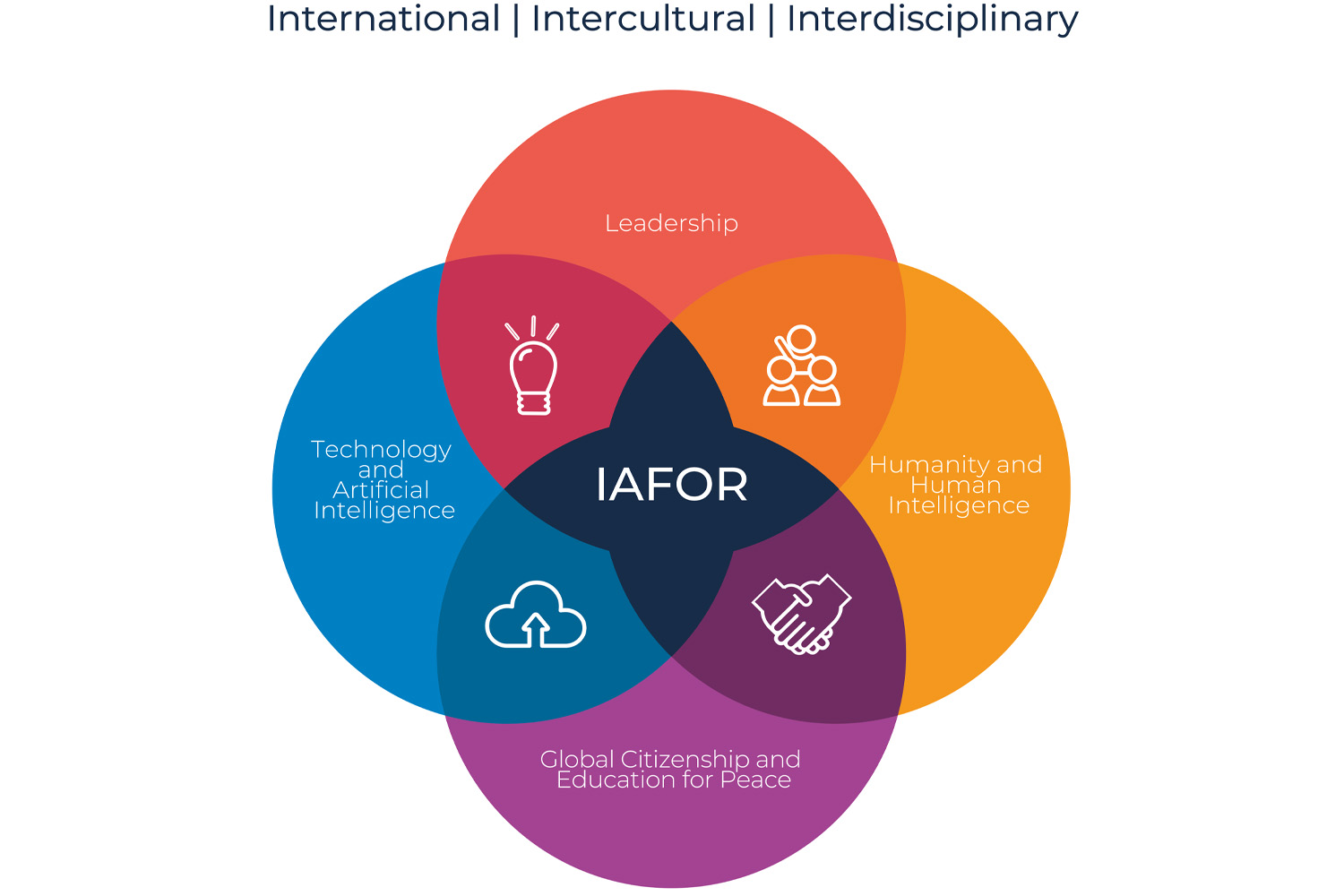
Our selected themes for 2025-2029 bring together ideas and encourage research and synergies in the following areas:
Technology and Artificial Intelligence
Humanity and Human Intelligence
Global Citizenship and Education for Peace
Leadership
Our four themes can be seen as standalone themes, but they are also very much in conversation with each other. Themes may be seen as corollaries, complementary, or in opposition/juxtaposition with each other. The themes can be considered as widely as possible and are designed, in keeping with our mission, to encourage ideas across the disciplines.
Read Last Year's Conference Report
Conference News



Sponsorship & Exhibition

About IAFOR
"International, Intercultural, Interdisciplinary"
Founded in 2009, The International Academic Forum (IAFOR) is a global interdisciplinary scholarly association that brings together scholars from around the world. Through research collaborations, publications, and international conferences, it connects academics across disciplines and regions. IAFOR's main administrative office is in Nagoya, Japan, and its research centre (The IAFOR Research Centre) is in the Osaka School of International Public Policy (OSIPP), a graduate school of The University of Osaka. Through its international, intercultural and interdisciplinary conferences, research, and publications, IAFOR is a network hub for interdisciplinary discussion across Asia and beyond.
IAFOR Main Site | IAFOR Research Archive | IAFOR Research Centre