
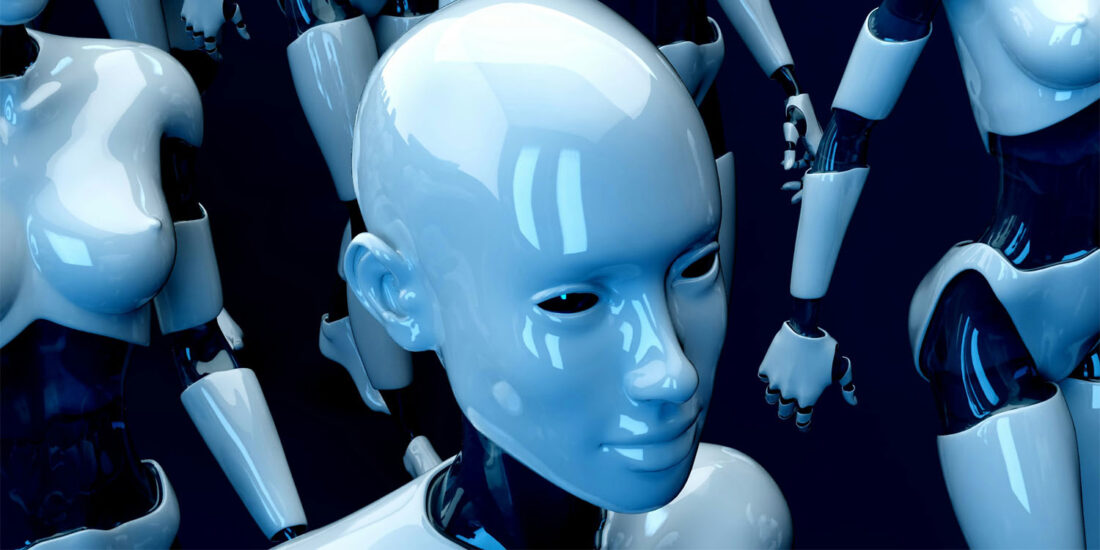
The proliferation of Artificial Intelligence (AI) has had an enormous psychological impact on society in terms of how we view ourselves and others, how we communicate with each other, and our relationship with technology. From an educational psychological perspective, Human Intelligence (HI) itself is contested: is it one factor, as in Spearman’s General Intelligence (GI) , measured by IQ tests; or does it consist of multiple factors, as in Gardner’s theory of Multiple Intelligences (MI), or Sternberg’s Triarchic Approach, with Analytical, Creative, and Practical Intelligences? Other types of HI have been proposed, such as Cattell’s Fluid Intelligence vs Crystallised Intelligence and Goleman’s Emotional Intelligence (EQ).
While there is no universally agreed upon definition of HI, it is generally accepted that it involves certain abilities, including learning, recognising, and solving problems. HI is understood as being brain-based, and that brain processes can largely be seen as computational processes. Our understanding of AI is also in a state of flux with rapid developments and disagreement among experts. At the moment, there are at least three different types of AI: Narrow AI, Artificial General Intelligence (AGI) = HI-level intelligence, and Artificial Super Intelligence (ASI). What is generally agreed on is that AI Large Language Models Systems ‘are not dissimilar to the human brain’s prefrontal cortex, the part of us that does abstract thinking and that separates us from the (sic) animals’. (Hamilton, William and Hattie, 2023).
The boundaries between humans and machines are already blurred. Hamilton, William and Hattie (2023) suggest that ‘We may already be in the era of “peak humanity”, with the greatest levels of education, reasoning, rationality, and creativity… spread out amongst the greatest number of us’. Although AI has yet to achieve its full potential, some experts believe that AGI will be fully realised within two years. The question of how humans are superior to machines is usually met with the same answers: consciousness, emotions, empathy, motivation, and creativity. Psychology, as the scientific study and application of human thinking, emotions, and behaviour, is well positioned to harness AI for positive human interaction with people from diverse backgrounds, achieving intergenerational and cross-cultural understanding. Both AI and psychological literacies are, therefore, extremely important: urgent action is needed to establish AI use policies in terms of equity, ethics, safety, and the future of humanity.
This panel discussion will address the following pressing questions regarding this need to act: What is the potential for AI? How is it currently being used, and how can it help transform human interaction and communication for the better? And finally, what are the dangers and benefits of these uses?
Read presenters' biographies